I have spent a significant portion of my career sitting across from engineers and founders who are brilliant at building things but struggle to tell the world why those things actually matter.
We are living in the most technologically advanced era in human history, yet most companies are still incredibly bad at explaining what they actually do. It is a strange paradox.
You spend years perfecting a proprietary algorithm or a new way to store energy, and then you try to sell it using a pixelated PowerPoint slide and a wall of text that would make a legal scholar weep.
If you are building something complex—whether it is a modular industrial plant for a multinational corporation or a revolutionary smart-home hub for a tech-savvy family—you are essentially dealing with a Black Box problem.
To the outside world, your genius looks like a silent, uninspiring metal cube. And let us be honest: nobody falls in love with a metal cube.
In my experience, the difference between the companies that get funded and the ones that fade into obscurity isn’t always the engineering.
It is the visual storytelling. If you cannot make your tech look as premium as the price tag you are asking for, you are leaving money on the table. You need to pull back the curtain. You need visual transparency.
The Death of the B2B versus B2C Divide
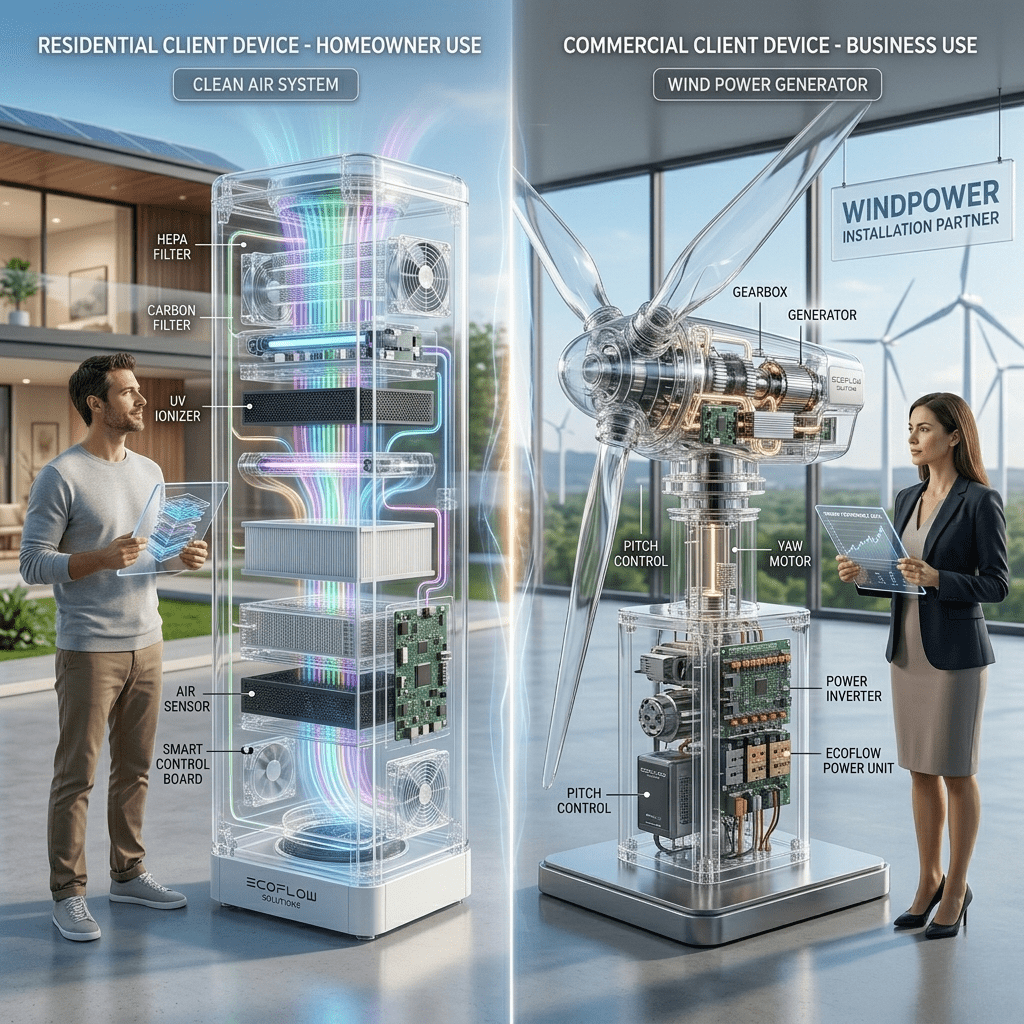
For years, the marketing world has been obsessed with the wall between B2B and B2C strategies. One was supposed to be purely rational and technical, driven by spreadsheets and whitepapers, while the other was emotional and lifestyle-driven. I am here to tell you that this wall has completely crumbled.
The person deciding whether to spend ten million dollars on your carbon-capture technology is the same person who goes home and buys high-end consumer electronics because they like the way the packaging feels.
We are all human. We all have the same cognitive biases. An investor at a venture capital firm is still a person who spends their time consuming high-quality visual content.
They have been trained by the modern digital world to expect clarity and beauty. When you use high-end, transparent visuals, you are speaking a universal language that transcends your specific industry. You are telling the professional buyer that your internal tolerances are so precise that you aren’t afraid to show them.
You are telling the individual consumer that your product isn’t just a utility, but a piece of premium technology that belongs in their home. In both cases, you are using human-centric design to bridge the gap between cold engineering and emotional buy-in.
The Philosophy of the X-Ray Effect

Think about the fascination people have with mechanical watches or high-performance engines. Why do we love seeing those gears turn? It is because the visual reveals the soul of the machine.
In sectors like clean tech or deep tech, we are often dealing with things that are literally invisible. We talk about energy flows, chemical reactions, or microscopic filtration.
If you just tell me your technology works better, I have to take your word for it. In a world full of empty promises and greenwashing, asking someone to just take your word for it is a massive hurdle.
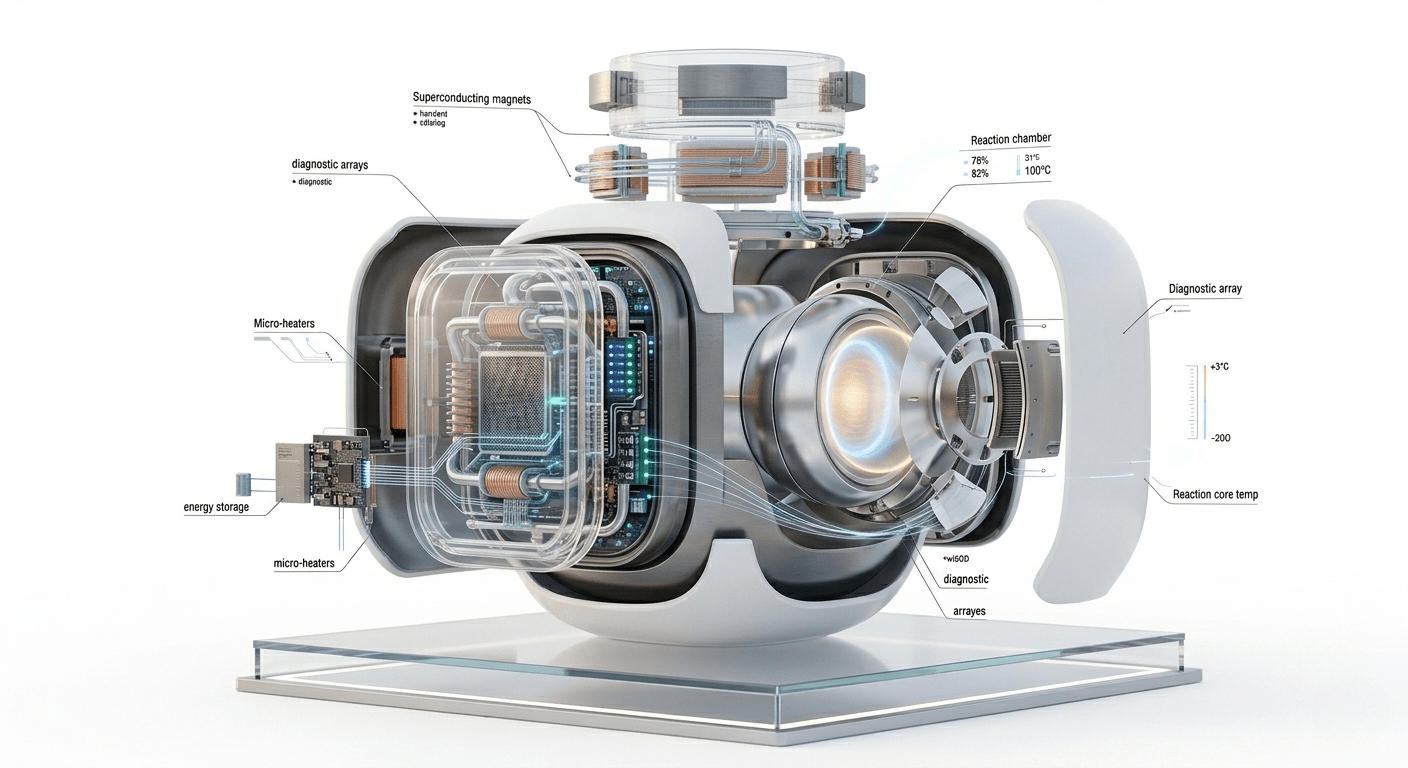
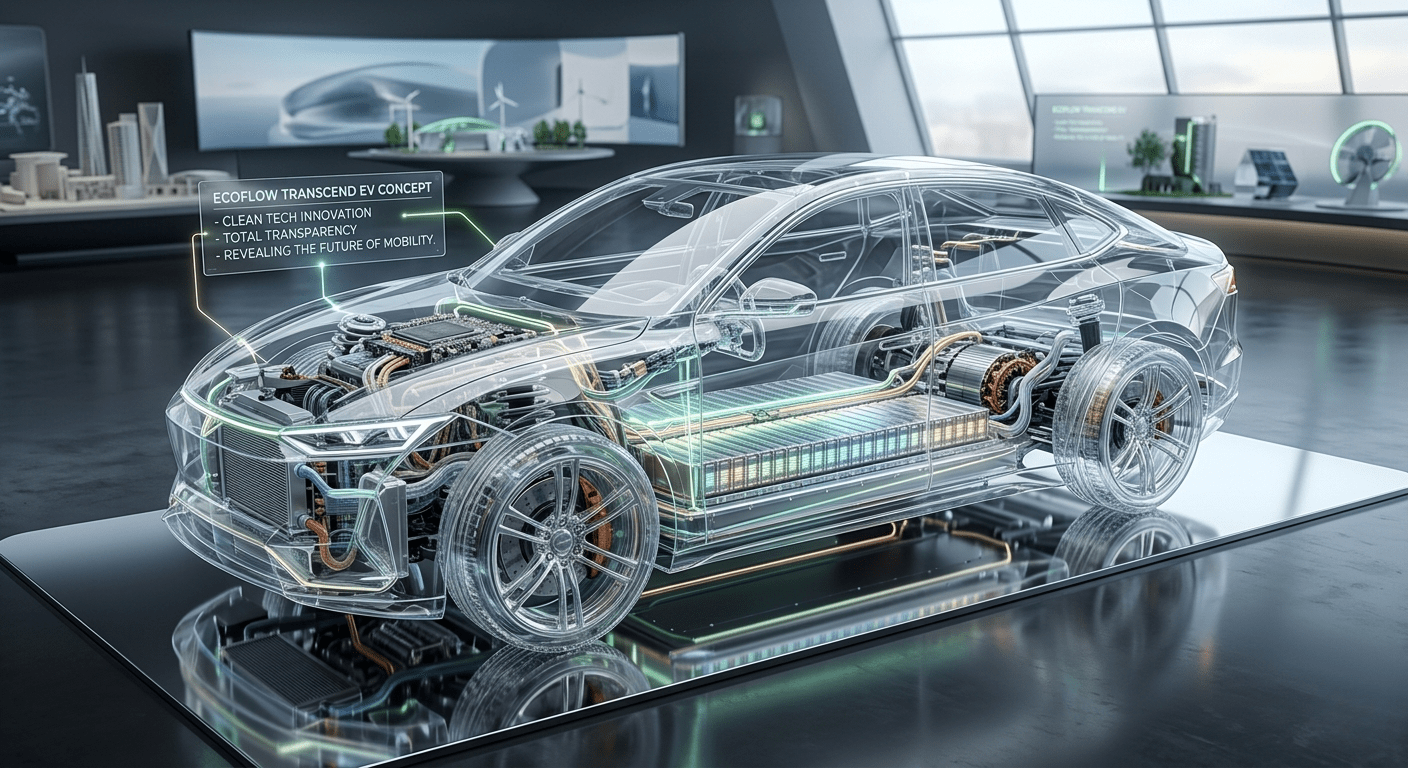
This is where the transparent render becomes your most effective strategy. I am not talking about clunky animations. I am talking about cinematic-quality visuals where every bolt, every circuit board, and every fluid path is rendered with hyper-realistic accuracy.
When you show the world exactly how a proprietary process works in a three-dimensional space, you aren’t just giving a presentation—you are providing visual proof. You are removing the risk from the equation because the viewer can see the logic with their own eyes.
For a consumer, that same visual says that this isn’t just a plastic box; it is a masterpiece of engineering. It builds a level of trust that words simply cannot achieve.
Building a Visual Vocabulary for Premium Brands
To be seen as a premium brand, you cannot rely on a single type of image. You need a cohesive toolkit that addresses different parts of the human brain.
The most successful technology companies I have worked with use a layered approach. They don’t just show the product; they show the craft, the function, and the impact simultaneously.
It starts with what I call tactile reality. This involves high-end photography that focuses on the materials. If your product is made of brushed aluminum or a specialized recycled polymer, the viewer needs to see the grain and the way light interacts with the surface.
This moves the technology out of the world of abstract ideas and into the world of physical objects. It signals quality. It makes the viewer want to reach out and touch it.
Then there is the functional map, often represented through exploded views. By pulling the product apart in a digital space, you allow the viewer to understand the complexity without feeling overwhelmed by it.
It is a way of saying that you have thought of everything. For a professional buyer, this is an essential part of the conversation regarding maintenance and installation.
You are showing them that the technology is intelligently designed and serviceable.
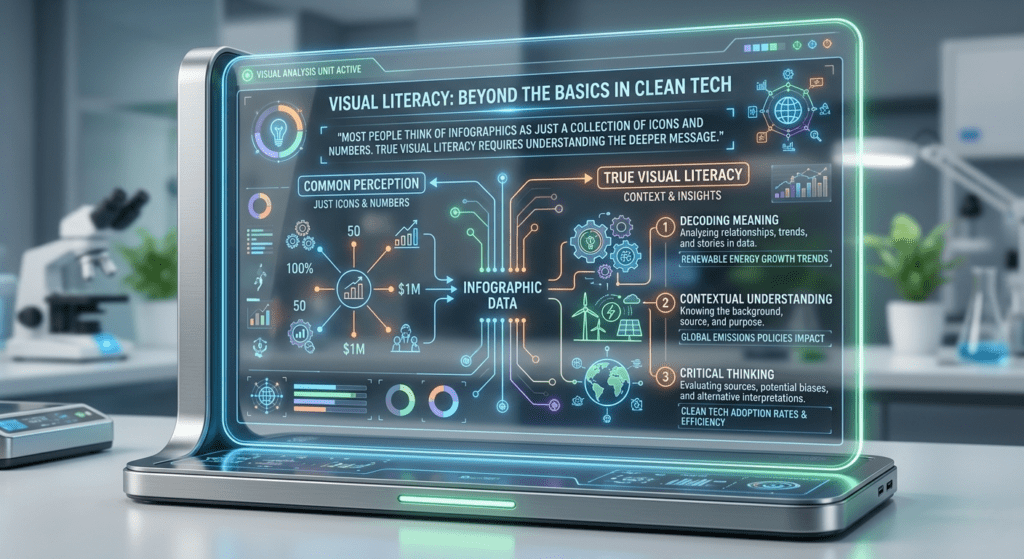
We also have to talk about visual literacy, which is where infographics come in. Most people think of infographics as just a collection of icons and numbers.
A human-centered infographic is different. It tells a story of transformation. Instead of a static chart, you use light and color to show a narrative. You show the journey of how your technology changes an environment or solves a specific problem. It is about visualizing the result, not just the data point.
In the digital age, we also have to consider the digital twin or interactive interface. People want to interact with technology before they commit to it.
When a visitor can rotate a model on your website or click on specific components to see how they function, they stop being a passive observer. They start to develop a sense of ownership.
This kind of engagement is a massive driver for both brand affinity and search engine performance.
Finally, there is the cinematic narrative. Sometimes you need to move beyond the technical and show the world you are creating.
A high-end video that blends real-world footage with floating digital overlays can win hearts and minds in a way that no document ever could. It is about showing the clean air, the efficient factory, or the resilient city that your innovation makes possible.
The Business Case for High-End Aesthetics
I often hear financial officers argue that premium visuals are a luxury or a decorative expense. I strongly disagree. In the world of high-stakes technology, premium visuals are a capital investment with a very clear return.
Consider the sales cycle. In complex industries, sales can take months or even years. Much of that time is spent answering the same technical questions over and over again.
A single, well-executed animated visual can replace hours of meetings. It pre-educates the lead so that when they finally speak to a person, they are ready to discuss the partnership, not the basic mechanics. It reduces the cognitive load on the buyer and makes it easier for them to say yes.
There is also the concept of price anchoring. If your marketing looks like it was done on a budget, you will always struggle to command a premium price.
You are essentially telling the market that you are a commodity. But when your visual identity reflects the same level of sophistication as your engineering, you create an aura of authority. You are no longer competing on price; you are competing on value and leadership.
Beyond that, we have to look at the digital ecosystem.
People share things that are beautiful and easy to understand. Nobody shares a dense technical whitepaper on social media, but they will share a stunning visual that makes them feel intelligent for understanding a complex topic.
This creates organic reach and builds your reputation as a thought leader in your space.
The Strategy of Intelligent Execution
If you are ready to stop being a black box, you have to change how you approach asset creation. You cannot just hire a general designer. You need people who understand the intersection of engineering and art.
You need technical artists who know how to read a CAD file but also know how to light a scene like a cinematographer.
One of the most effective strategies I recommend is the create once, publish everywhere model.
If you invest in a hyper-detailed, high-fidelity master model of your technology, you aren’t just getting one image. You are creating a library of assets. That one model can be the source for your hero video, your technical brochures, your social media content, and even augmented reality tools for your sales team.
When you spread the investment across all those touchpoints, the cost per asset drops dramatically while the brand impact stays consistently high.
The Human Bottom Line
At the end of the day, we are not just selling machines or software or systems. We are selling a vision of the future. Whether you are trying to decarbonize the planet or just making a specific industrial process ten percent more efficient, you are asking people to join you on a journey.
Complex technology is inherently difficult to love. It can feel cold, intimidating, and distant. But transparency is easy to trust.
By opening up your technology and showing the world the beauty of what you have built, you are doing more than just marketing. You are humanizing the future.
People are far more likely to invest in, buy, and support a future that they can actually see and understand.
It is time to stop hiding the genius of your engineering behind a curtain of text and start showing the world what you are actually made of.