The reason CleanTech Companies Fail at Digital Marketing
Why do most CleanTech companies fail at digital marketing?
In reality, both consumers and businesses don’t buy based on mission alone—they buy based on value, clarity, and trust.
For consumers, that means clear cost savings, simplicity, and reliability.
For businesses, it means ROI, payback period, and risk reduction.
CleanTech is booming.
Investment is rising. Governments are pushing. Consumers are more aware than ever. Businesses are under pressure to decarbonize.
On paper, everything looks perfect.
So why are so many CleanTech companies struggling to scale through digital marketing?
It’s not the product.
It’s not the demand.
It’s the disconnect between what companies say… and what buyers actually need to hear to make a decision.
This article breaks that gap wide open—and shows you how to rebuild your strategy into a mission-driven, data-powered CleanTech digital marketing system that works across both B2B and B2C audiences.
The Current Landscape — Why CleanTech Marketing is Broken
Before fixing anything, you need to understand the terrain. CleanTech marketing doesn’t fail randomly—it fails systematically due to how the industry is structured and how audiences behave.
This section sets the foundation: who you’re really targeting, how they think, and why most strategies never gain traction.
CleanTech Is Not One Audience — It’s Multiple Buying Worlds
Most companies approach CleanTech like a single market.
It’s not.
It’s a convergence of completely different audiences:
B2B Segments
- Enterprises and industrial operators
- Government and municipalities
- Procurement and finance teams
- ESG and sustainability leaders
B2C Segments
- Homeowners adopting solar or energy storage
- Eco-conscious consumers
- Cost-sensitive households
- Small business owners
And here’s where things break:
👉 These groups don’t just differ slightly—they operate on entirely different decision logic.
How Each Audience Actually Makes Decisions
If you don’t understand this, everything else collapses.
B2C buyers think:
- “Will this reduce my monthly bills?”
- “Is it simple and safe?”
- “Can I trust this company?”
B2B buyers think:
- “What’s the ROI and payback period?”
- “What’s the operational risk?”
- “Will this integrate into our systems?”
Same product.
Completely different buying psychology.
The Virtue Trap — Where Good Intentions Kill Conversion
Here’s the first major failure.
CleanTech companies lean heavily on mission:
“We’re saving the planet.”
“We’re reducing emissions.”
That messaging feels powerful.
But it rarely converts.
Because in real decisions:
- Consumers prioritize cost savings and convenience
- Businesses prioritize financial outcomes and risk reduction
The Real Decision Flow
Awareness → “This is good for the planet”
Evaluation → “Is this worth the cost?”
Decision → “What’s the ROI, risk, and payoff?”
If your marketing only addresses awareness…
You lose at evaluation.
Sales and Marketing Misalignment — The Invisible Growth Killer
Another hidden issue: internal disconnect.
Marketing celebrates:
- traffic
- impressions
- clicks
Sales cares about:
- qualified leads
- pipeline
- revenue
Without alignment:
- Leads don’t convert
- Sales cycles stretch
- Customer acquisition cost in CleanTech increases
What Alignment Should Look Like

When this loop works, growth becomes predictable.
When it doesn’t… everything feels random.
Core Reasons CleanTech Digital Campaigns Fail
Now that we understand the landscape, let’s get into the real breakdown points.
This section dives into the tactical and strategic mistakes that cause most CleanTech digital marketing campaigns to underperform.
1. Generic Messaging in a Hyper-Specific Industry
Most CleanTech messaging sounds inspiring—but vague:
- “Build a sustainable future”
- “Clean energy solutions”
- “Reduce your carbon footprint”
The problem?
👉 These don’t answer the buyer’s real question: “What’s in it for me?”
Why This Fails Across B2B and B2C
Because each audience needs specificity:
- Homeowners want clear savings
- Businesses want clear ROI
- Governments want compliance clarity
What High-Converting Messaging Looks Like
Instead of:
“Go green”
Say:
- “Reduce your electricity bill by 35% within 12 months” (B2C)
- “Achieve ROI in 18 months with 22% energy cost reduction” (B2B)
Audience Messaging Matrix
| Audience | Priority | Message |
|---|---|---|
| Homeowners | Savings | Lower monthly costs |
| Businesses | ROI | Payback period |
| Government | Compliance | Meet regulations |
| ESG Leaders | Impact | Verified data |
2. Weak Digital Infrastructure and Tracking
Here’s a harsh truth:
👉 You can’t scale what you can’t measure.
Many CleanTech companies lack:
- proper CRM systems
- attribution tracking
- lead scoring
Why This Is Critical
CleanTech has:
- high acquisition costs
- long sales cycles
- complex journeys
Without data:
- budget gets wasted
- campaigns can’t be optimized
- growth stalls
What Strong Infrastructure Includes
- CRM with lifecycle tracking
- Marketing automation
- Multi-touch attribution
- Behavioral analytics
3. Lack of Visual and Experiential Marketing
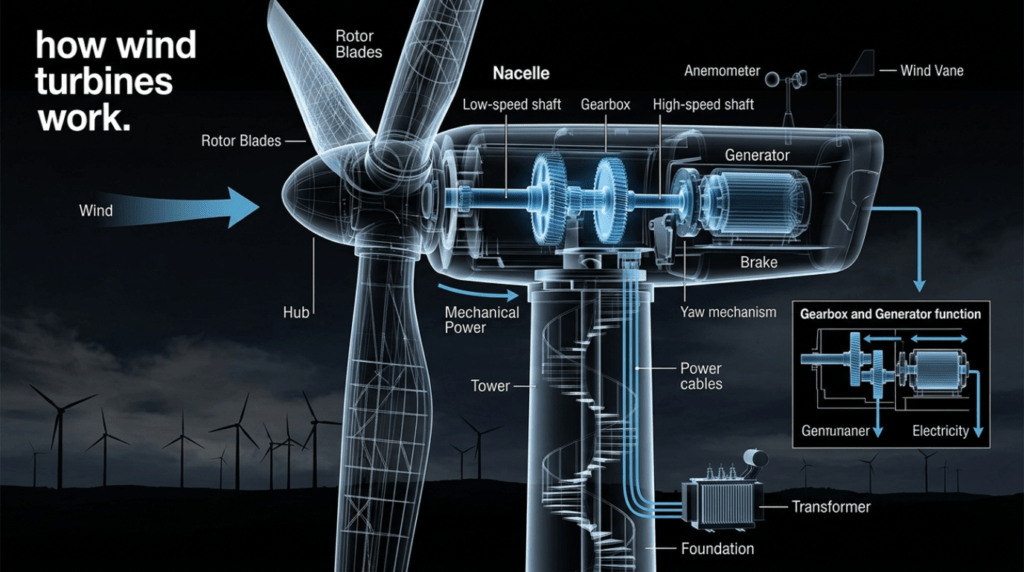
This is one of the most underestimated failures.
CleanTech is complex.
But most companies explain it using:
- text-heavy pages
- static visuals
- generic diagrams
That creates confusion.
What Buyers Are Thinking
👉 “I don’t fully understand this.”
👉 “This seems complicated.”
👉 “This feels risky.”
And confusion kills conversion.
What Works Instead
- 3D visualizations
- Interactive tools
- Energy flow animations
- ROI simulations
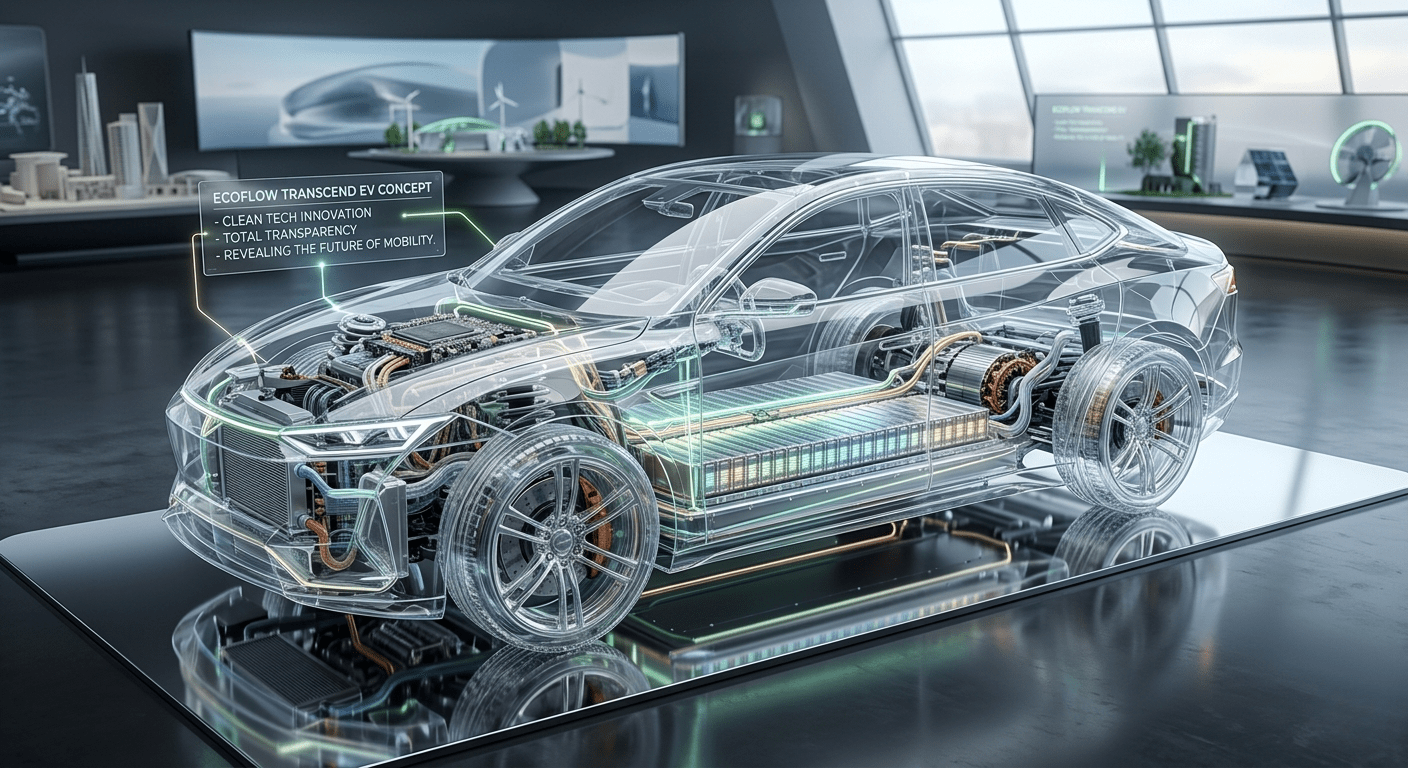
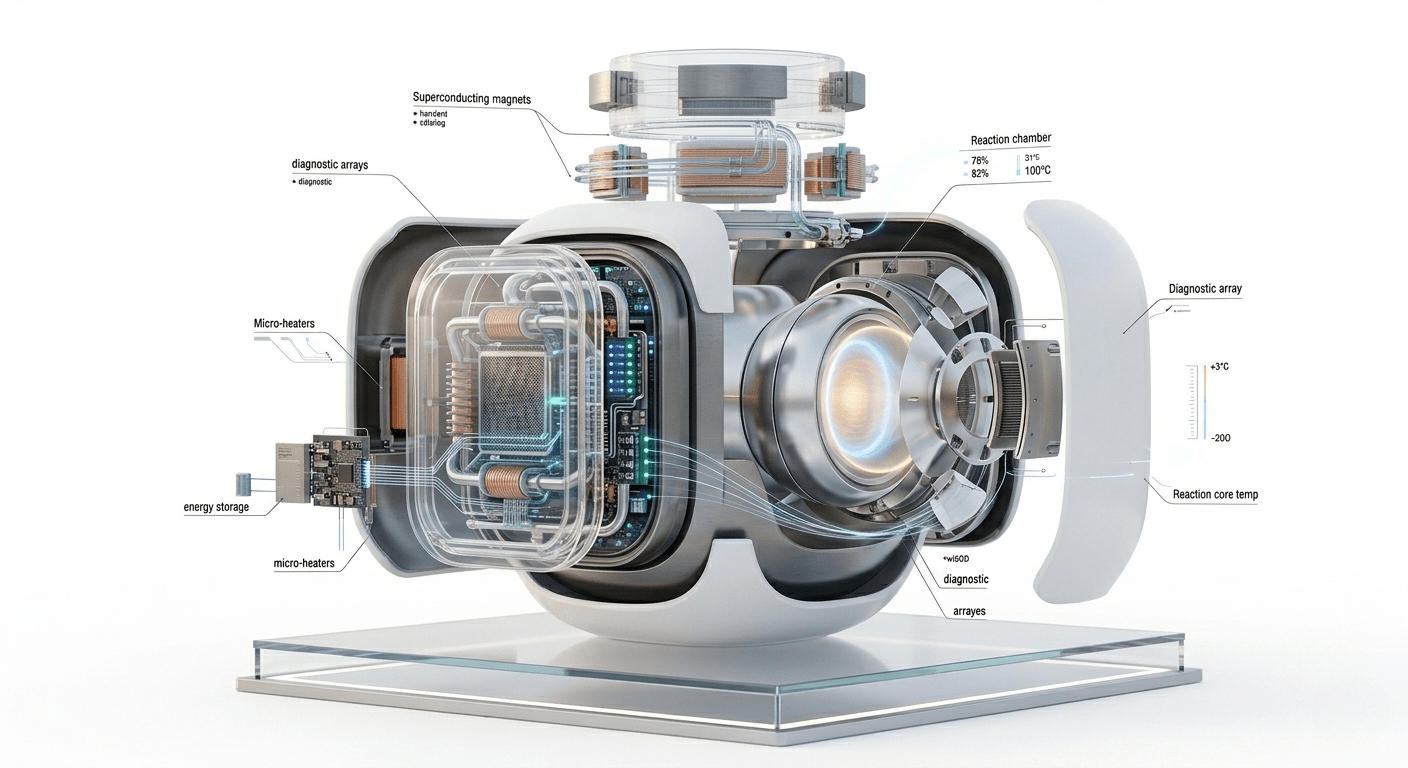
Most clean tech companies are still presenting advanced technologies in outdated ways—flat visuals, simple animations, and surface-level explanations that look decent but fail to actually explain anything. You see solar panels or turbines, maybe a few arrows, but no real clarity on how the system works. This approach doesn’t educate—it just decorates. It leaves audiences confused, disconnected, and unsure, which ultimately weakens trust and reduces engagement.

The new standard is radically different. Instead of hiding complexity, it reveals it—through high-end, immersive visuals like 3D and Transparent perspectives that show internal components, energy flow, and system interactions in a clear, compelling way. When people can see how everything works, understanding becomes instant, trust increases, and the technology feels powerful instead of complicated. The future of clean tech communication isn’t simpler visuals—it’s clearer, deeper, and more engaging storytelling.
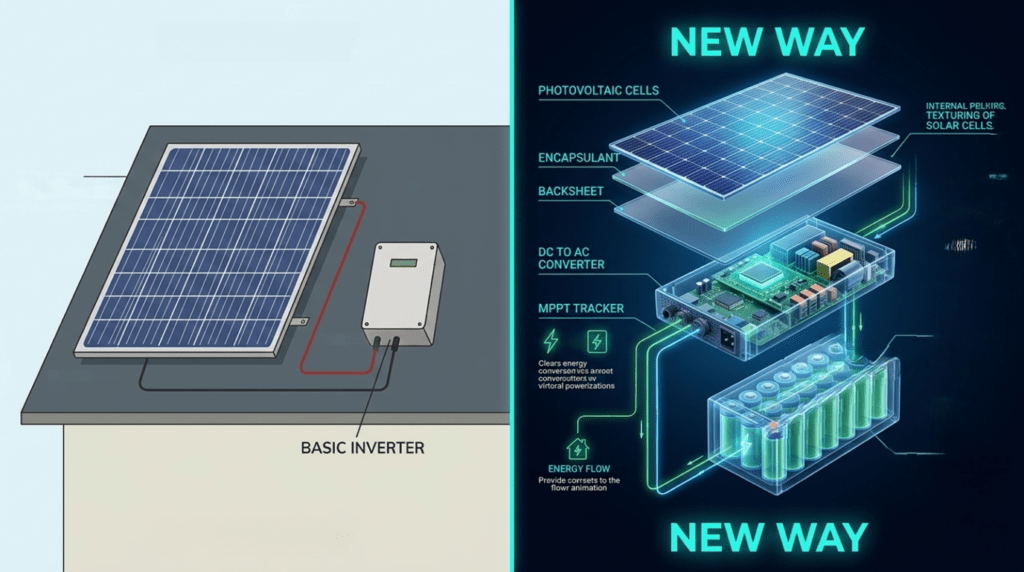
Clarity builds confidence.
Confidence drives decisions.
Section 3: The 2026 Paradigm Shift — Mission Meets Data
Now we shift from problems to evolution.
This section explores how CleanTech marketing is transforming—and what separates outdated strategies from modern, scalable systems.
From Reactive to Predictive Marketing
Traditional marketing looks backward.
Modern marketing predicts behavior.
What’s Changing
- AI identifies high-intent users
- Campaigns adapt in real time
- Data drives targeting decisions
Predictive Flow Example
User visits pricing page twice
→ Intent score increases
→ Personalized offer triggered
→ Sales engages at peak interest
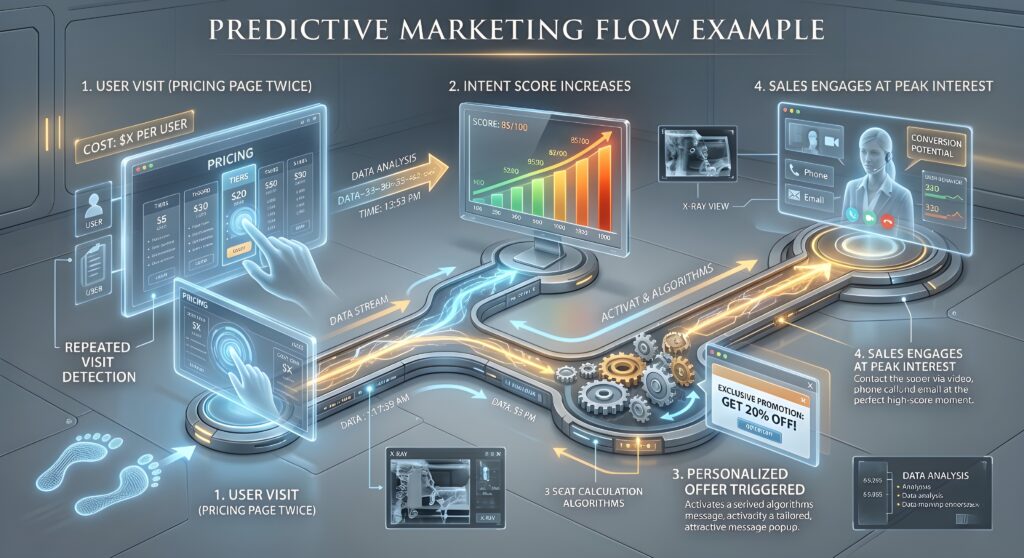
This reduces waste and increases conversion.
Purpose + Proof = Trust
In 2026, sustainability messaging must evolve.
Not just:
“We reduce emissions”
But:
“We reduced 12,000 tons of CO₂ across 300 installations last year.”
Why This Works
Because trust is the biggest barrier in CleanTech adoption.
And trust is built through:
- specificity
- transparency
- measurable outcomes
Blueprint for a Data-Powered CleanTech Strategy
Now we build a system that actually works.
This section gives you a structured, actionable framework to scale effectively.
Step 1: Build a Unified Revenue Engine (RevOps)
Everything must be connected.
Core System
Traffic → Leads → CRM → Automation → Sales → Analytics → Optimization
What This Unlocks
- faster response times
- higher lead quality
- lower CAC
- better LTV to CAC ratio
Step 2: Content That Educates and Converts
CleanTech buyers don’t convert quickly.
They research.
They validate.
They compare.
Content Strategy by Stage
Top of Funnel
- educational content
- awareness blogs
Middle
- ROI calculators
- comparisons
Bottom
- technical breakdowns
- financial analysis
Step 3: Visual-First Marketing Strategy
This is your competitive edge.
High-Impact Visuals
- 3D explainers
- interactive dashboards
- system simulations
- before/after comparisons
Core Principle
👉 If people have to imagine it, they hesitate.
👉 If they can see it, they trust it.
Future-Proofing Your Growth for 2026 and Beyond
Finally, let’s look ahead.
This section focuses on building a system that continues to work as the market evolves.
AI and Hyper-Personalization
Marketing is becoming:
- real-time
- personalized
- automated
What This Looks Like
- dynamic landing pages
- personalized email sequences
- AI-optimized campaigns
Regulation and Trust
Greenwashing is under scrutiny.
Consumers demand:
- transparency
- proof
- accountability
3-Step Compliance Framework
- verify claims with data
- document everything
- align messaging with regulations
Final Insight — Why CleanTech Marketing Really Fails
It’s not the product.
It’s not the market.
It’s not the competition.
👉 It’s the gap between what you say and what your audience needs to believe before they act.
The Companies That Win in 2026 Will:
- Speak to both B2B and B2C audiences clearly
- Lead with value, supported by mission
- Use visuals to simplify complexity
- Build data-driven systems
- Educate before selling
Because in CleanTech…
You’re not just selling energy solutions.
You’re selling:
- clarity
- confidence
- control
And when your marketing delivers that?
Growth stops being unpredictable…
…and starts becoming engineered.
In summary, the reason most CleanTech companies stumble in digital marketing is that they focus too much on idealistic mission statements, without tying them to clear, measurable financial value. By addressing both B2B decision-makers—who need ROI, risk reduction, and integration clarity—and B2C consumers—who need simplicity and cost savings—CleanTech brands can break through. When paired with data-driven strategies, strong visual explanations, and a unified revenue engine, CleanTech marketing stops being a guessing game and becomes a predictable growth engine, ready for 2026 and beyond.