Header Only

Category: Digital Marketing

A comprehensive approach to building powerful online growth systems. This category covers cutting-edge strategies, data-driven frameworks, and innovative technologies designed to attract high-value audiences, increase visibility, and drive scalable revenue across digital channels.

  • The Definitive Guide to Clean Tech Email Marketing

    The Definitive Guide to Clean Tech Email Marketing

    Let us talk about the wild world of clean tech email marketing. If you are selling solar grids, hydrogen fuel cells, or carbon capture tech, you already know you are not just pushing a quick impulse buy. You are navigating notoriously long, complex sales cycles that can take anywhere from six to eighteen months.

    Email marketing for clean tech sits right at the intersection of digital marketing and sustainable innovation. It is entirely different from your standard eCommerce or traditional B2B playbook.

    You have to nail a tricky balancing act: being highly technically accurate while telling a compelling, emotional story about environmental impact.

    A solid email strategy acts as the bridge between prospect skepticism and closed deals, nurturing leads with consistent education and hard proof of both ROI and sustainability.

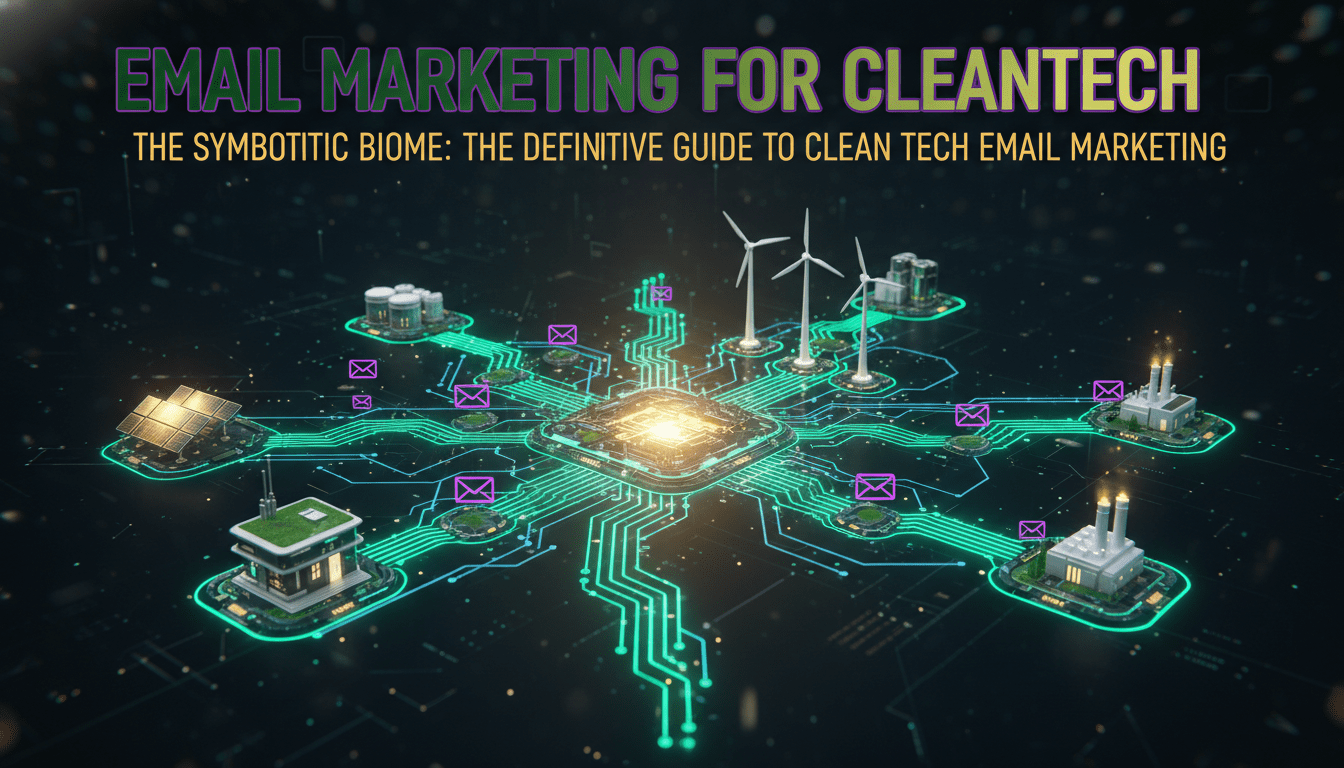
    In this guide, we will explore how to master the “Symbiotic Biome” of email—a system where B2B and B2C strategies coexist to drive the green revolution forward.

    1. The Dual Nature: B2B vs. B2C in the Green Space

    Before we dive into the specific emails, we must acknowledge that “Clean Tech” is a broad church. The way you talk to a CTO of a manufacturing plant (B2B) is fundamentally different from how you talk to a homeowner looking to install a residential battery (B2C).

    The B2B Landscape: Logic, Risk, and Regulation

    In the B2B sector, your emails are competing with hundreds of other operational priorities. These buyers are risk-averse. They are not just buying a product; they are making a capital expenditure (CAPEX) that will sit on their books for 20 years.

    The Motivators: They care about Levelized Cost of Energy (LCOE) regulatory compliance (ESG reporting), and operational uptime.

    The Strategy: Your emails must function as a “Consultant in an Inbox.” You are there to help them look good to their board of directors.

    Your content should focus on mitigating the risk of transition and proving the long-term fiscal health of the investment. Use technical whitepapers, ROI calculators, and regulatory update briefings.

    The B2C Landscape: Savings, Status, and Stewardship

    For the B2C consumer, the motivation is often a mix of “wallets and wonders.” They want to save money on their monthly utility bills, but they also want the “Tesla effect”—the status of being an early adopter and the peace of mind that they are protecting the planet for their children.

    The Motivators: Monthly savings, energy independence (not being reliant on a failing grid), and carbon footprint reduction.

    The Strategy: Your emails should be high-visual, emotive, and easy to digest. Use “You” centered language. Focus on lifestyle integration. How does this tech make their home smarter, cheaper to run, and more resilient? Use stories, high-quality photography, and simple “how-to” videos.

    2. The 7 Essential Email Types: A Deep Dive

    To thrive, your email ecosystem needs diversity. Here are the seven types of emails every clean tech company needs to deploy, how to use them, and why they work.

    Type 1: The “Genesis” Welcome Sequence

    The Strategy: This is your first impression. When someone downloads your “Guide to Microgrids” or signs up for your “Green Living” newsletter, the first 48 hours are critical. This is when their interest is highest.

    How to use it (The 5-Day Blueprint):

     Day 1: The Mission. Why do you exist? (The “Why”). Welcome them to the community and deliver the lead magnet immediately.

    Day 2: The Logic. Share a foundational piece of content that explains the problem your tech solves.

    Day 3: The Proof. Share a customer testimonial or a quote from a high-authority industry publication.

    Day 4: The Objection. Address the biggest question people have (e.g., “What happens when the sun doesn’t shine?”).

    Day 5: The Invitation. A low-pressure call to action, like joining a live webinar or using a self-service sizing tool.

    Benefit: It establishes immediate authority and sets the tone for a relationship, not just a transaction. It automates the “know, like, and trust” factor.

    Type 2: The “Deep Roots” Educational/Nurture Email

    The Strategy: Clean tech is complex. If a prospect doesn’t understand the science, they won’t buy the solution.

    How to use it: Take one complex topic—say, “The difference between Blue and Green Hydrogen”—and break it down. Use analogies. Compare a battery’s capacity to a water tank. Make the invisible (energy) visible (impact).

     B2B Version: Focus on the technical efficiency and the “Total Cost of Ownership.”

    B2C Version: Focus on the “Peace of Mind” and the simplicity of use.

    Benefit: This builds the “Curse of Knowledge” in reverse. By educating the buyer, you become their most trusted source. When they are finally ready to sign a contract, they won’t go to a competitor because the competitor didn’t help them understand the tech like you did.

    Type 3: The “Social Proof” Case Study

    The Strategy: In clean tech, nobody wants to be the first guinea pig, but everyone wants to be the first winner. Case studies move the tech from “theoretical” to “operational.”

    How to use it:

    The B2B Story: Feature a “Before and After” of a similar company. Focus on the hard numbers: “How [Company X] reduced energy overhead by 22% in 12 months.” Use charts and quotes from their Facility Manager.

    The B2C Story: Use emotive storytelling. “Meet the Miller Family: How they went off-grid and survived a week-long storm with their backup system.” Use photos of the family and their home.

    Benefit: It removes the fear of the unknown. It proves that the technology works in the real world, under real stress.

    Type 4: The “Innovation Alert” Product Update

    The Strategy: Clean tech moves fast. If you’ve improved your efficiency rating by 2% or launched a new software integration, that is a big deal.

    How to use it: Don’t just list specs. Explain the so what.

    “Our new inverter is 5% smaller” becomes “More space in your utility room and easier installation.”

    “We updated our monitoring app” becomes “Now you can track your carbon savings in real-time from your smartwatch.”

    Benefit: It shows you are at the cutting edge. For B2B, it signals long-term viability and R&D strength. For B2C, it creates a sense of “Tech Pride.”

    Type 5: The “Impact Report” (The Heartbeat)

    The Strategy: This is unique to our industry. Your customers want to know their investment is working—not just financially, but ecologically.

    How to use it: Send monthly or quarterly updates on collective impact. “Together, our community has diverted 500 tons of CO2 this month.” Use dynamic data tags to show individual impact where possible. “You personally saved 4 trees this month.”

    Benefit: This is pure retention gold. It validates the purchase decision and turns customers into brand evangelists. It gives them something to talk about at dinner parties or in boardrooms.

    Type 6: The “Direct Line” Webinar/Event Invite

    The Strategy: High-ticket clean tech requires high-touch engagement. You need to humanize the engineering.

    How to use it: Invite prospects to a “Live Q&A with our Lead Engineer” or a “Policy Briefing on New Green Subsidies.”

    B2B: Focus on “Policy and Profit.”

    B2C: Focus on “Home Energy Mastery.”

    Benefit: It builds a community. It gives you a platform to address technical objections en masse rather than one-on-one, which scales your sales effort.

    Type 7: The “Pruning” Re-engagement Email

    The Strategy: Because sales cycles are long, leads go cold. Life happens. Budgets get shifted. You need to know who is still in the game.

    How to use it: Send a “Is this still a priority?” email. Acknowledge that green transitions take time. Offer a fresh piece of data—perhaps a new government rebate that was just announced.

    Subject line: “Still looking to lower your carbon footprint?” or “A new solar rebate just launched in [State Name].”

    Benefit: It cleans your list (improving deliverability) and often shakes the tree to see which “low-hanging fruit” is finally ready to ripen.

    3. Crafting the Content: Rhythm, Tone, and Hook

    Now let’s discuss how we say what we say. In clean tech, the tone must be Authoritative yet Accessible.

    Avoid the “Jargon Jungle”

    Engineers love acronyms (PV, LCOE, DER, EPC). Your buyers might not.

    B2B Strategy: Use the acronyms but define them the first time. It shows you know your stuff without being elitist.

    B2C Strategy: Avoid them entirely. Talk about “Sun Power,” “The Storage Tank,” and “Energy Independence.”

    The Power of “Micro-Copy”

    Use short, punchy sentences to drive the rhythm.

    “The grid is aging. Power costs are rising. The sun is free. We help you bridge the gap.”

    This creates a sense of momentum that matches the fast-paced nature of the energy transition.

    The “Curse of Knowledge”

    Always assume your reader is smart but busy. They don’t have time to decode your message. Every email should pass the “Skim Test.” If they only read the headlines and the CTA (Call to Action), do they know what to do next?

    4. Mastering the Flow: Automation and Segmentation

    You cannot manually send these emails to 10,000 people. You need a “Digital Irrigation System”—also known as automation.

    Behavioral Triggers: The “Right Time” Factor

    In clean tech, timing is everything.

    Page Visit Trigger: If a B2B lead visits your “Technical Specs” page three times in a week, trigger a “Deep Dive” case study email.

    Calculator Trigger: If a B2C lead uses your “Solar ROI Calculator” but doesn’t book a consultation, trigger a “How it Works” video series.

    Document Download: If someone downloads a “Compliance Guide,” tag them as a “High-Intent Professional” and send them a webinar invite for B2B leaders.

    Segmentation: The Secret Sauce

    Stop sending the same email to everyone. Segment your list by:

    1.  Persona: Are they a Homeowner, a Sustainability Officer, or a General Contractor?

    2.  Tech Interest: Are they interested in Solar, Wind, Storage, or EV Charging?

    3.  Geography: In clean tech, location is destiny. Rebates in California don’t apply to New York. Segmenting by zip code allows you to send hyper-relevant local incentives.

    5. Metrics That Matter: Moving Beyond the Open Rate

    In clean tech, an “Open Rate” doesn’t pay the bills. You need to look deeper into the “Health of the Biome.”

    Click-to-Open Rate (CTOR): This tells you if your content was actually valuable. If they opened but didn’t click, your “Educational” content might be too dry.

    Lead Velocity: How fast are people moving from your “Welcome” sequence to a “Sales Call”? If it takes 4 months, can your emails shorten it to 3?

    The “Green” KPI: Track how many people are clicking on “Impact Reports.” This measures brand affinity. A customer who clicks on an impact report is 3x more likely to refer a friend.

    Pipeline Attribution: Use UTM parameters to track every click. You should be able to say, “This $500k microgrid deal started with a click on our ‘Hydrogen 101’ email six months ago.”

    6. Compliance and Ethics: The Green Standard

    Data Privacy as CSR

    GDPR/CCPA: These aren’t just hurdles; they are opportunities to show you respect the individual. Always use a transparent double opt-in. Clearly state how data will be used.

    Transparency: Tell people exactly how often you will email them. “Once a week we send a deep dive into the future of energy.” Then, stick to it.

    The Unsubscribe Link: Make it easy to find. If they don’t want to be part of the movement, let them go gracefully.

    List Hygiene: Routinely scrub your list for inactive users. Maintaining high data ethics perfectly aligns with the broader CSR mission of green brands.

    7. The Strategy of the “Nurture Bridge”

    Why do we do all this? Because the gap between “I’m interested in solar” and “I’m signing a $2 million commercial solar contract” is huge.

    The Nurture Bridge is built by these emails.

    The First Planks: Awareness and Education (Welcome & Nurture emails).

    The Support Beams: Trust and Authority (Case Studies & Innovation Alerts).

    The Final Stretch: Confidence and Action (Webinars & Direct Outreach).

    Without email, that bridge has holes. Prospects fall through. They get distracted by other priorities or confused by the technical complexity. Your email strategy is the safety net that ensures every lead—whether B2B or B2C—crosses the finish line.

    Conclusion: Planting the Seeds for a 20-Year Relationship

    Clean tech email marketing is not about the quick win. It is about the long-term harvest. You are selling solutions that will define the next century of human life on this planet. Your marketing should reflect that gravity and that excitement.

    By building an ecosystem of educational, emotive, and evidence-based emails, you bridge the gap between “interesting idea” and “essential infrastructure.”

    Whether you are speaking to a homeowner looking to save $100 a month or a CEO looking to decarbonize a multi-national supply chain, the goal remains the same: simplify the complex, prove the ROI, and tell a story that makes the reader feel like they are part of the solution. If you do this consistently, you don’t just build a mailing list. You build a movement. And in the world of clean tech, movements are what change the world—and your bottom line.
  • How to Turn Your Boring Clean Tech Science into Viral Video Stories

    How to Turn Your Boring Clean Tech Science into Viral Video Stories

    The Density Trap: Why Your Science is Stalling (and Killing Your ROI)

    How can clean tech companies turn complex science into engaging video content that drives both B2B and B2C results?

    Clean tech companies can turn complex science into engaging videos by using animated explainers to simplify invisible processes, case studies to show real-world impact, and storytelling where the customer is the hero. Strategic distribution across LinkedIn for B2B and social Shorts for B2C, combined with tracking watch time and conversions, ensures videos educate, inspire, and drive measurable results

    Let’s be brutally honest for a second: explaining carbon capture, long-duration energy storage, or AI-driven grid optimization is not exactly “light reading.” You’ve spent years—maybe decades—perfecting a solution that could literally save the planet. But when you try to explain it? You lean on a 40-page whitepaper or a text-heavy PDF that looks like a 1990s textbook.

    Here’s the reality you need to face: whether you’re pitching a $50M industrial contract to a CFO or trying to convince a sustainability-conscious homeowner to swap their furnace for a heat pump, you’re fighting the exact same enemy: The Boredom Barrier.

    Confused people don’t buy. They don’t invest. And they definitely don’t share your content. In the high-stakes world of clean tech, “confused” equals “no.” B2B buyers don’t have the time to hunt for a value proposition buried in page 12 of a document, and B2C customers don’t have the patience to decode engineering-speak before they’ve had their morning coffee.

    You’re asking your audience to do heavy cognitive lifting. In an era of eight-second attention spans, that is a losing bet.

    Then there’s the “Greenwashing Ghost.” Everyone and their mother is claiming to be “sustainable” now. Skepticism is the default setting for both investors and homeowners. They’ve been burned by vaporware before. They don’t want to read your claims; they need to see them to believe them.

    Video isn’t just a “marketing asset” anymore—it’s your only shot at building instant trust. It’s the bridge between “deep science” and “real human desire.” While a user might bounce from a technical blog post in thirty seconds, they’ll happily sit through a two-minute video that actually shows them the future.

    It’s time to stop hiding your brilliance behind a wall of text.

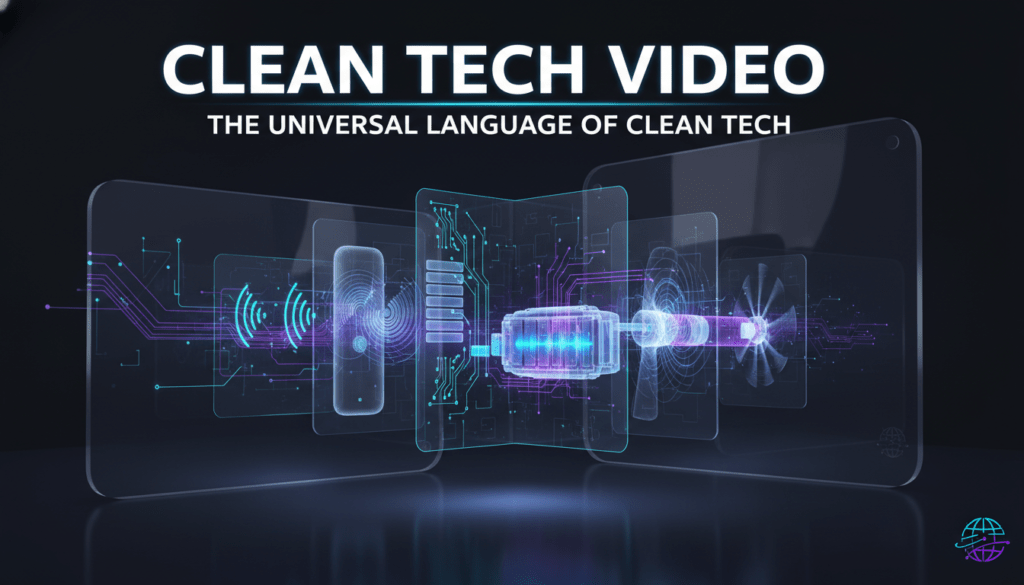
    The Universal Language of Clean Tech Video

    The clean tech industry has a unique communication problem. You’re often dealing with things that are invisible: energy flows, software algorithms, carbon molecules, and long-term climate impacts. Text simply doesn’t have the bandwidth to make the invisible feel real.

    Video is the most powerful medium for sustainability because it functions as a “Universal Translator.” It captures the micro-level technical “genius” for the skeptical B2B engineer and the macro-level “world-saving” impact for the B2C consumer.

    When you use motion graphics to show how a smart home system balances the grid, you aren’t just explaining physics; you’re selling a story of empowerment.

    Wait, but why does this matter for both audiences?

    For the B2B decision-maker, visual proof builds unshakeable credibility. Seeing your pilot plant in action proves your tech is functional and scalable—not just a pitch deck fantasy.

    For the B2C customer, video builds an emotional bond. It turns a “utility purchase” into a “lifestyle choice.” With the brain processing visual info 60,000 times faster than text, video is the only way to compete for attention.

    If you aren’t using video to simplify the complex, you’re essentially invisible.

    Core Types of Videos Every Clean Tech Brand Needs

    You don’t just need “a video.” You need a strategic visual ecosystem that speaks to the head (B2B) and the heart (B2C).

    1. The “Invisible-Made-Visible” Animated Explainer

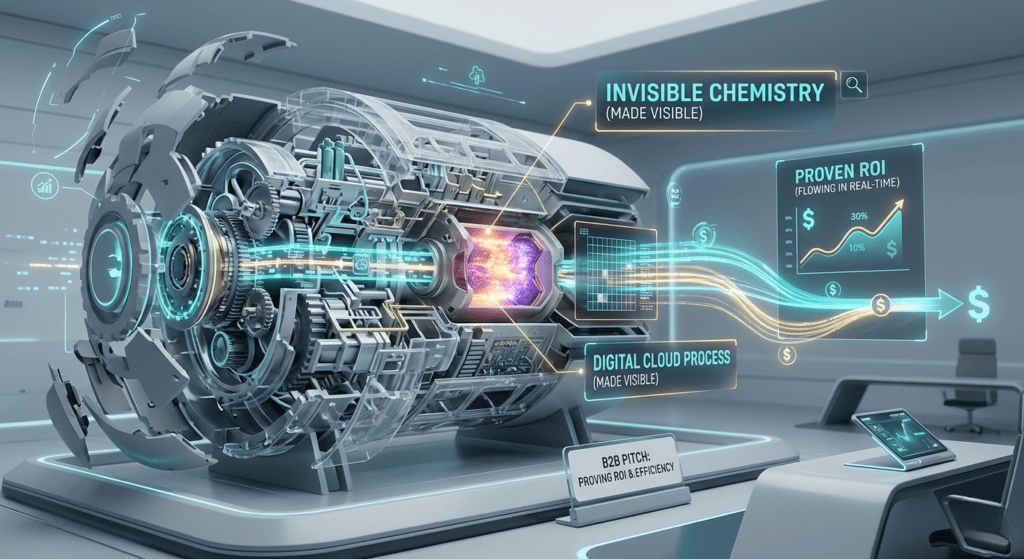
    First up: animated explainers. These are the ultimate lifesavers for complex systems. When your technology happens inside a pipe, deep in a digital cloud, or involves a chemical reaction that can’t be seen by the naked eye, live-action won’t save you.

    For the B2B Pitch: Use 3D “exploding” views. Show the internal engineering. Prove the efficiency. Make the CFO see the ROI flowing through the system in real-time.

    For the B2C Consumer: Keep it clean, friendly, and lifestyle-focused. Use 2D and 3D animation to show how the product fits into their daily life. Focus on “plug and play,” not “chemical bonding.”

    The secret to a viral-ready explainer isn’t the software; it’s the narrative arc. You have to architect the script around the friction and the freedom. If you spend 90 seconds on the chemical bond and only 10 seconds on why it saves the customer money, you’ve failed. Imagine a sleek animation where “waste” is represented by chaotic red lines that turn into calm, efficient green pulses as your software takes over. It looks premium, it feels high-tech, and it makes the concept instantly click.

    2. The “Real-World” Documentary and Case Study

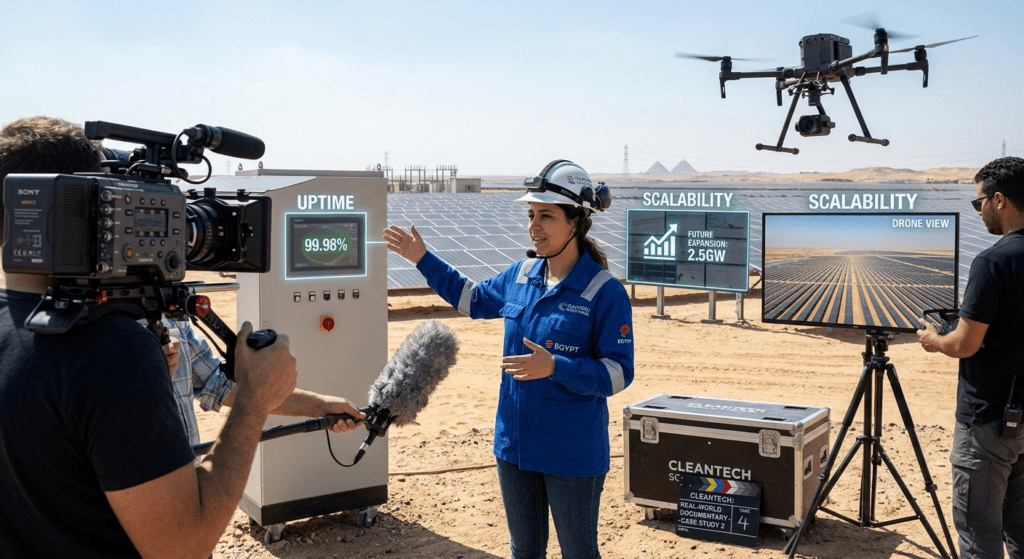
    You have to ground that digital sophistication in physical reality. If you have a physical installation—be it a massive solar farm for a utility company or a single battery unit in a residential garage—you have to show it off.

    The B2B Version: Go on-site. Interview the lead engineers and the client’s project manager. Talk about “uptime,” “integration,” and “scalability.” Use drone shots to capture the massive industrial scale.

    The B2C Version: Focus on the “Saturday Morning” factor. Interview a real family. Is their house warmer? Is their bill actually lower? Do they feel like heroes?

    Professional production is non-negotiable here. You need high-quality lighting to make an industrial setting look aspirational and drone permits to show the “Big Picture.” These videos serve as your “social proof” in its most potent, visual form.

    3. Educational Videos – Teach, Inspire, Convert

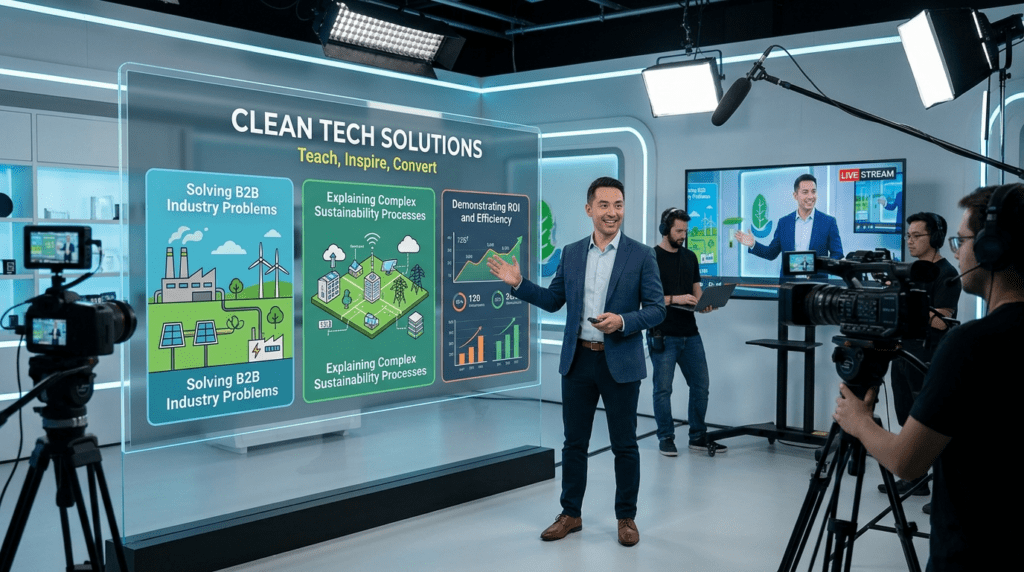
    Educational videos are your secret weapon for connecting with both businesses and consumers. For B2B, these videos can showcase how your clean tech solutions solve industry-specific problems, explain complex sustainability processes, or demonstrate ROI and efficiency benefits.

    For B2C, they can teach homeowners, eco-conscious buyers, or climate-aware individuals about practical green solutions, energy-saving tips, or the impact of adopting sustainable technologies.

    The beauty of educational videos is that they position your brand as an expert while giving viewers real value. By helping your audience understand why your technology matters—and how to use it—you naturally build trust and engagement across all types of buyers.

    Crafting a Story That Sticks (No Matter Who Is Watching)

    Great clean tech marketing isn’t a list of specs; it’s a transformation story. You have to move from “what it is” to “what it allows the world to become.”

    Stop Talking About Gigawatts

    Seriously. Unless you’re talking to a grid engineer, nobody cares about the raw numbers. They care about the impact.

    B2B: Don’t say “high thermal efficiency.” Say “This system reduces your operational overhead by 22% annually.”

    B2C: Don’t say “low-carbon output.” Say “This allows your kids to grow up in a cleaner neighborhood.”

    Features are for the manual; benefits are for the video.

    The “Earth as the Hero” Script

    If you want deep engagement, stop making your company the hero. Your customer is the hero. In this scenario:

    The Hero (The Homeowner or the CEO) faces a Villain (Rising energy costs, grid instability, climate guilt). They encounter a Guide (That’s you). The Guide gives them a Tool (Your Science/Video Story). They achieve a New Reality (A sustainable, profitable future). It’s a proven psychological loop. Use it.

    The Radical Transparency Rule

    In 2026, transparency is the only antidote to greenwashing. Audiences—both B2B and B2C—can smell a “marketing spin” a mile away. Use video to pull back the curtain. Show the lab tests. Show the failures you overcame. Naturally weave in your third-party certifications like B-Corp status or ISO standards.

    When you show the actual data on a screen within a video, it carries 10x the weight of a footnote in a brochure.

    Distribution: Don’t Build a Ghost Town

    A masterpiece doesn’t matter if it’s sitting on a hard drive. You need a dual-track distribution strategy.

    LinkedIn: The B2B Powerhouse

    For investors and industrial partners, LinkedIn is your primary theater. But don’t just dump a five-minute video there. Chop it into 15-second “Technical Nuggets.” Each clip should highlight one specific “aha!” moment.

    Crucial Tip: Always use “burned-in” captions. Most B2B users are scrolling with the sound off during meetings or commutes. If they can’t read what you’re saying, they’re moving on.

    Social: The B2C Battlefield

    TikTok, Instagram, and YouTube Shorts. You have exactly three seconds to hook a homeowner before they swipe to a recipe video. Start with a punch to the gut: “Why is your house wasting $200 a month?” or “What if your house could pay you back?”

    The Sales Funnel Integration

    Embed your explainers on your landing pages. A video can boost conversion by 80%. Instead of a “Download Whitepaper” button, give them a “Watch the 60-Second Overview” button. Use the video to “hook” the fish, then offer the whitepaper for the deep-dive technical details.

    Measuring Success: Beyond the “Vanity” View

    How do you know if your videos are actually working?

    You have to move beyond “likes” and track the KPIs that drive your business model.

    The B2B Metrics:

    Watch time and “heat maps” are your best friends. If your industrial partners are all dropping off at the 45-second mark when you talk about “modular integration,” your explanation is too complex. You need to simplify the visual. Track how many “Demo Requests” or “Whitepaper Downloads” come directly from that video landing page.

    The B2C Metrics:

    Click-through rate (CTR) and social shares. If homeowners are sharing your video with their neighbors, you’ve won. Monitor the “Conversion Rate” of your “Shop Now” or “Get a Quote” buttons. A/B test your thumbnails—sometimes changing a headline from “Save the Planet” to “Save $3,000 on Energy” changes everything.

    The Bottom Line

    At the end of the day, turning your complex science into viral video stories isn’t a “nice-to-have” luxury; it’s a business necessity. If people don’t understand you, they can’t buy from you.

    Stop hiding behind dense, uninspired PDFs that gather digital dust. Start showing your impact. Start visualizing your innovation. By marrying the rigor of your science with the punch of a digital marketing pro, you don’t just inform your audience—you inspire them to act. Video is the only medium that can scale the trust you need to actually change the world.

    So to recap Clean tech companies can turn complex science into viral video stories by:

    • Using animated explainers to make invisible processes clear.
    • Showing real-world impact through case studies and documentaries.
    • Highlighting benefits over technical features.
    • Applying storytelling where customers are heroes and tech is the guide.
    • Distributing strategically on LinkedIn for B2B and social Shorts for B2C.
    • Measuring success with demo requests, conversions, and watch time.

    Videos that combine technical rigor with clear, engaging narratives educate, inspire, and drive measurable results.

    Now, go get a camera.

  • Why Most CleanTech Companies Fail at Digital Marketing (And How to Win in 2026)

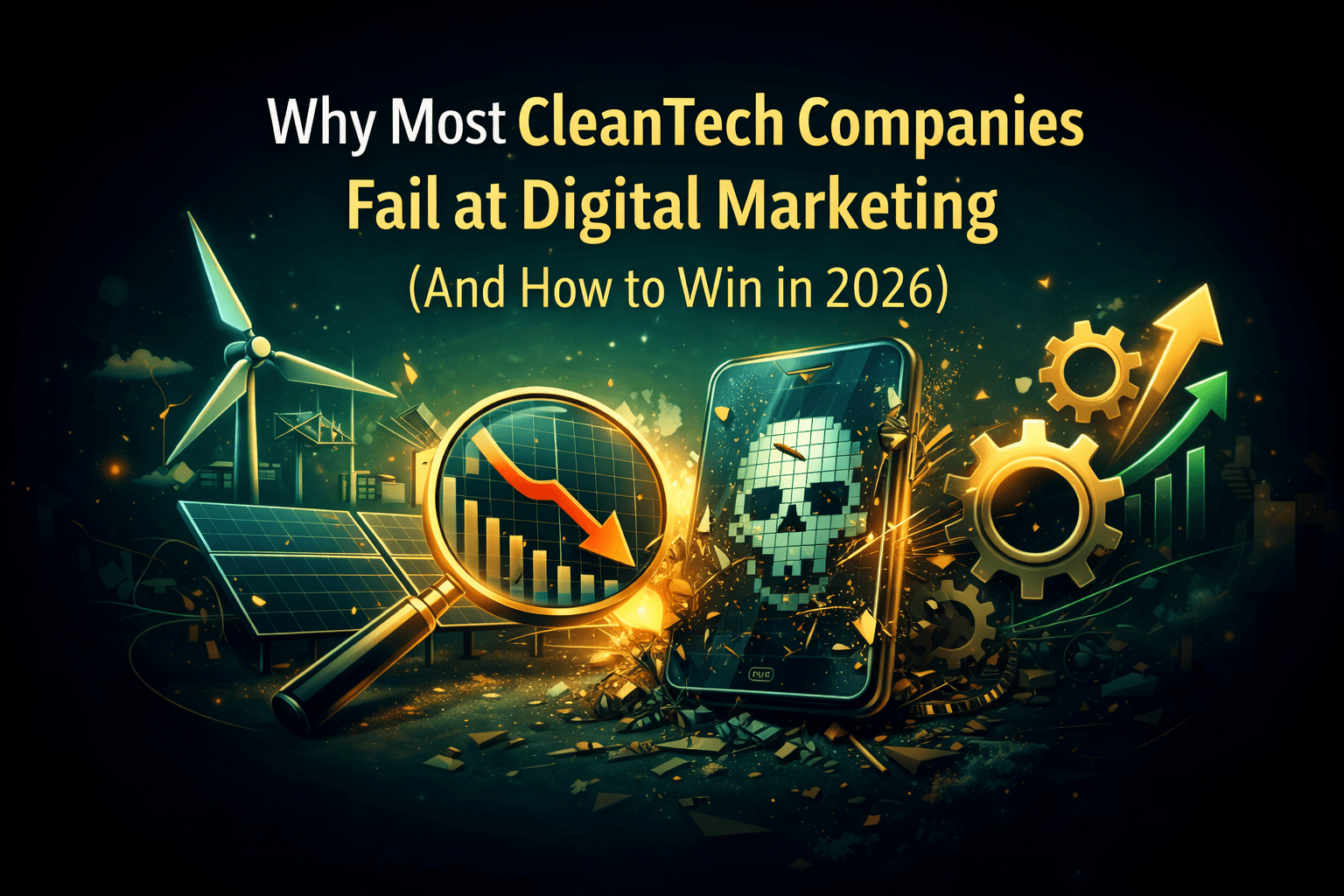
    Why Most CleanTech Companies Fail at Digital Marketing (And How to Win in 2026)

    The reason CleanTech Companies Fail at Digital Marketing

    Why do most CleanTech companies fail at digital marketing?

    Most CleanTech companies fail at digital marketing because they focus too heavily on sustainability messaging while ignoring how people actually make decisions.
    In reality, both consumers and businesses don’t buy based on mission alone—they buy based on value, clarity, and trust.
    For consumers, that means clear cost savings, simplicity, and reliability.
    For businesses, it means ROI, payback period, and risk reduction.

    CleanTech is booming.

    Investment is rising. Governments are pushing. Consumers are more aware than ever. Businesses are under pressure to decarbonize.

    On paper, everything looks perfect.

    So why are so many CleanTech companies struggling to scale through digital marketing?

    It’s not the product.
    It’s not the demand.

    It’s the disconnect between what companies say… and what buyers actually need to hear to make a decision.

    This article breaks that gap wide open—and shows you how to rebuild your strategy into a mission-driven, data-powered CleanTech digital marketing system that works across both B2B and B2C audiences.


    The Current Landscape — Why CleanTech Marketing is Broken

    Before fixing anything, you need to understand the terrain. CleanTech marketing doesn’t fail randomly—it fails systematically due to how the industry is structured and how audiences behave.

    This section sets the foundation: who you’re really targeting, how they think, and why most strategies never gain traction.


    CleanTech Is Not One Audience — It’s Multiple Buying Worlds

    Most companies approach CleanTech like a single market.

    It’s not.

    It’s a convergence of completely different audiences:

    B2B Segments

    • Enterprises and industrial operators
    • Government and municipalities
    • Procurement and finance teams
    • ESG and sustainability leaders

    B2C Segments

    • Homeowners adopting solar or energy storage
    • Eco-conscious consumers
    • Cost-sensitive households
    • Small business owners

    And here’s where things break:

    👉 These groups don’t just differ slightly—they operate on entirely different decision logic.


    How Each Audience Actually Makes Decisions

    If you don’t understand this, everything else collapses.

    B2C buyers think:

    • “Will this reduce my monthly bills?”
    • “Is it simple and safe?”
    • “Can I trust this company?”

    B2B buyers think:

    • “What’s the ROI and payback period?”
    • “What’s the operational risk?”
    • “Will this integrate into our systems?”

    Same product.
    Completely different buying psychology.


    The Virtue Trap — Where Good Intentions Kill Conversion

    Here’s the first major failure.

    CleanTech companies lean heavily on mission:

    “We’re saving the planet.”
    “We’re reducing emissions.”

    That messaging feels powerful.

    But it rarely converts.

    Because in real decisions:

    • Consumers prioritize cost savings and convenience
    • Businesses prioritize financial outcomes and risk reduction

    The Real Decision Flow

    Awareness → “This is good for the planet”
    Evaluation → “Is this worth the cost?”
    Decision → “What’s the ROI, risk, and payoff?”

    If your marketing only addresses awareness…

    You lose at evaluation.


    Sales and Marketing Misalignment — The Invisible Growth Killer

    Another hidden issue: internal disconnect.

    Marketing celebrates:

    • traffic
    • impressions
    • clicks

    Sales cares about:

    • qualified leads
    • pipeline
    • revenue

    Without alignment:

    • Leads don’t convert
    • Sales cycles stretch
    • Customer acquisition cost in CleanTech increases

    What Alignment Should Look Like


    When this loop works, growth becomes predictable.

    When it doesn’t… everything feels random.


    Core Reasons CleanTech Digital Campaigns Fail

    Now that we understand the landscape, let’s get into the real breakdown points.

    This section dives into the tactical and strategic mistakes that cause most CleanTech digital marketing campaigns to underperform.


    1. Generic Messaging in a Hyper-Specific Industry

    Most CleanTech messaging sounds inspiring—but vague:

    • “Build a sustainable future”
    • “Clean energy solutions”
    • “Reduce your carbon footprint”

    The problem?

    👉 These don’t answer the buyer’s real question: “What’s in it for me?”


    Why This Fails Across B2B and B2C

    Because each audience needs specificity:

    • Homeowners want clear savings
    • Businesses want clear ROI
    • Governments want compliance clarity

    What High-Converting Messaging Looks Like

    Instead of:

    “Go green”

    Say:

    • “Reduce your electricity bill by 35% within 12 months” (B2C)
    • “Achieve ROI in 18 months with 22% energy cost reduction” (B2B)

    Audience Messaging Matrix

    AudiencePriorityMessage
    HomeownersSavingsLower monthly costs
    BusinessesROIPayback period
    GovernmentComplianceMeet regulations
    ESG LeadersImpactVerified data

    2. Weak Digital Infrastructure and Tracking

    Here’s a harsh truth:

    👉 You can’t scale what you can’t measure.

    Many CleanTech companies lack:

    • proper CRM systems
    • attribution tracking
    • lead scoring

    Why This Is Critical

    CleanTech has:

    • high acquisition costs
    • long sales cycles
    • complex journeys

    Without data:

    • budget gets wasted
    • campaigns can’t be optimized
    • growth stalls

    What Strong Infrastructure Includes

    • CRM with lifecycle tracking
    • Marketing automation
    • Multi-touch attribution
    • Behavioral analytics

    3. Lack of Visual and Experiential Marketing

    This is one of the most underestimated failures.

    CleanTech is complex.

    But most companies explain it using:

    • text-heavy pages
    • static visuals
    • generic diagrams

    That creates confusion.


    What Buyers Are Thinking

    👉 “I don’t fully understand this.”
    👉 “This seems complicated.”
    👉 “This feels risky.”

    And confusion kills conversion.


    What Works Instead

    • 3D visualizations
    • Interactive tools
    • Energy flow animations
    • ROI simulations

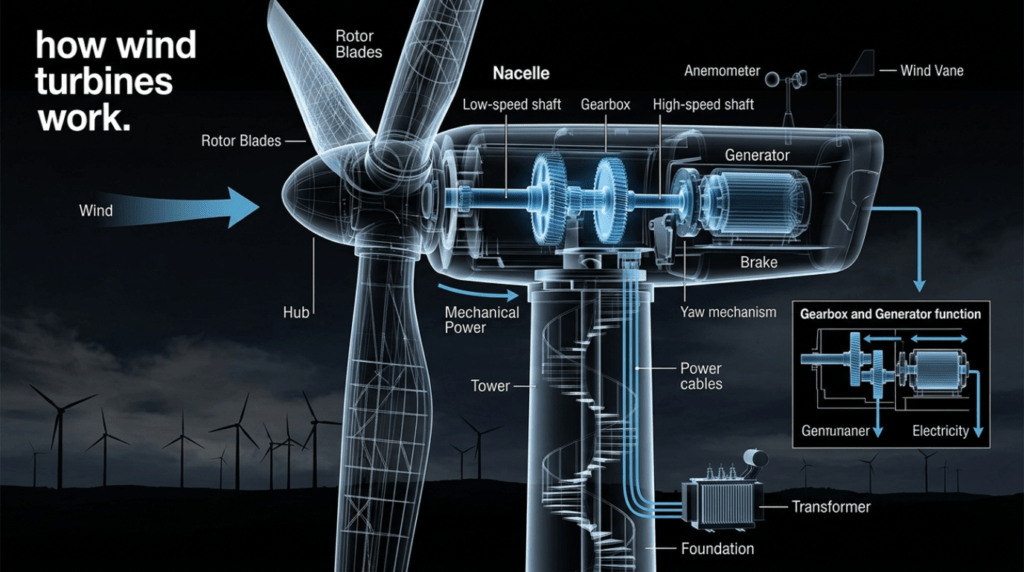
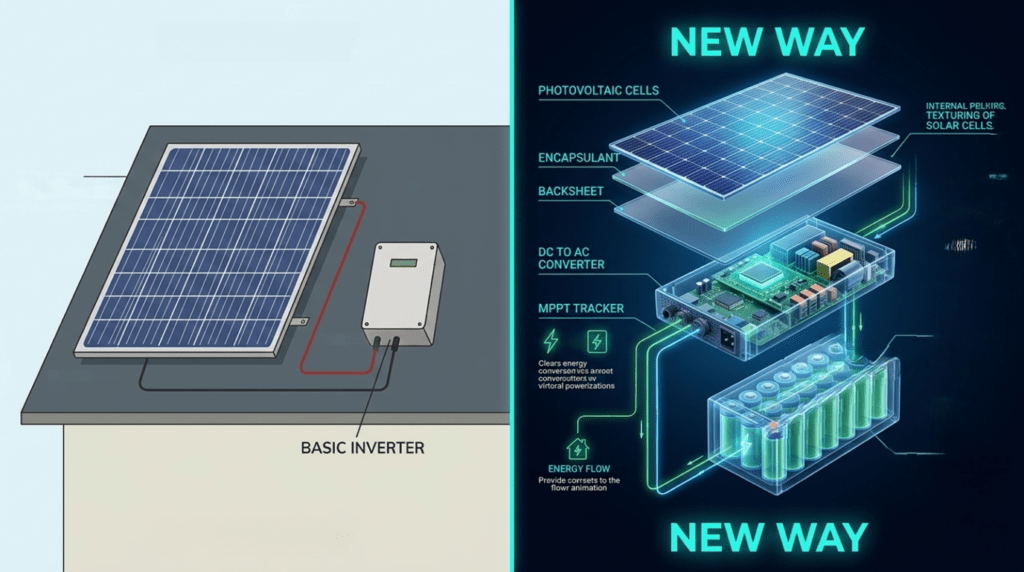
    Most clean tech companies are still presenting advanced technologies in outdated ways—flat visuals, simple animations, and surface-level explanations that look decent but fail to actually explain anything. You see solar panels or turbines, maybe a few arrows, but no real clarity on how the system works. This approach doesn’t educate—it just decorates. It leaves audiences confused, disconnected, and unsure, which ultimately weakens trust and reduces engagement.

    The new standard is radically different. Instead of hiding complexity, it reveals it—through high-end, immersive visuals like 3D and Transparent perspectives that show internal components, energy flow, and system interactions in a clear, compelling way. When people can see how everything works, understanding becomes instant, trust increases, and the technology feels powerful instead of complicated. The future of clean tech communication isn’t simpler visuals—it’s clearer, deeper, and more engaging storytelling.

    Clarity builds confidence.
    Confidence drives decisions.


    Section 3: The 2026 Paradigm Shift — Mission Meets Data

    Now we shift from problems to evolution.

    This section explores how CleanTech marketing is transforming—and what separates outdated strategies from modern, scalable systems.


    From Reactive to Predictive Marketing

    Traditional marketing looks backward.

    Modern marketing predicts behavior.


    What’s Changing

    • AI identifies high-intent users
    • Campaigns adapt in real time
    • Data drives targeting decisions

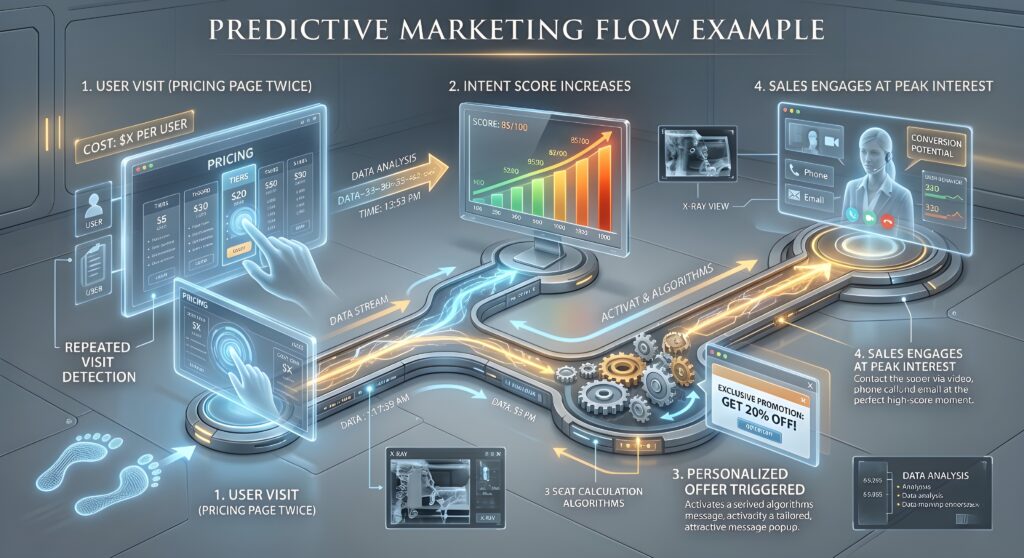
    Predictive Flow Example

    User visits pricing page twice
    → Intent score increases
    → Personalized offer triggered
    → Sales engages at peak interest

    This reduces waste and increases conversion.


    Purpose + Proof = Trust

    In 2026, sustainability messaging must evolve.

    Not just:

    “We reduce emissions”

    But:

    “We reduced 12,000 tons of CO₂ across 300 installations last year.”


    Why This Works

    Because trust is the biggest barrier in CleanTech adoption.

    And trust is built through:

    • specificity
    • transparency
    • measurable outcomes

    Blueprint for a Data-Powered CleanTech Strategy

    Now we build a system that actually works.

    This section gives you a structured, actionable framework to scale effectively.


    Step 1: Build a Unified Revenue Engine (RevOps)

    Everything must be connected.


    Core System

    Traffic → Leads → CRM → Automation → Sales → Analytics → Optimization

    What This Unlocks

    • faster response times
    • higher lead quality
    • lower CAC
    • better LTV to CAC ratio

    Step 2: Content That Educates and Converts

    CleanTech buyers don’t convert quickly.

    They research.

    They validate.

    They compare.


    Content Strategy by Stage

    Top of Funnel

    • educational content
    • awareness blogs

    Middle

    • ROI calculators
    • comparisons

    Bottom

    • technical breakdowns
    • financial analysis

    Step 3: Visual-First Marketing Strategy

    This is your competitive edge.


    High-Impact Visuals

    • 3D explainers
    • interactive dashboards
    • system simulations
    • before/after comparisons

    Core Principle

    👉 If people have to imagine it, they hesitate.
    👉 If they can see it, they trust it.


    Future-Proofing Your Growth for 2026 and Beyond

    Finally, let’s look ahead.

    This section focuses on building a system that continues to work as the market evolves.


    AI and Hyper-Personalization

    Marketing is becoming:

    • real-time
    • personalized
    • automated

    What This Looks Like

    • dynamic landing pages
    • personalized email sequences
    • AI-optimized campaigns

    Regulation and Trust

    Greenwashing is under scrutiny.

    Consumers demand:

    • transparency
    • proof
    • accountability

    3-Step Compliance Framework

    1. verify claims with data
    2. document everything
    3. align messaging with regulations

    Final Insight — Why CleanTech Marketing Really Fails

    It’s not the product.

    It’s not the market.

    It’s not the competition.


    👉 It’s the gap between what you say and what your audience needs to believe before they act.


    The Companies That Win in 2026 Will:

    • Speak to both B2B and B2C audiences clearly
    • Lead with value, supported by mission
    • Use visuals to simplify complexity
    • Build data-driven systems
    • Educate before selling

    Because in CleanTech…

    You’re not just selling energy solutions.

    You’re selling:

    • clarity
    • confidence
    • control

    And when your marketing delivers that?

    Growth stops being unpredictable…

    …and starts becoming engineered.

    In summary, the reason most CleanTech companies stumble in digital marketing is that they focus too much on idealistic mission statements, without tying them to clear, measurable financial value. By addressing both B2B decision-makers—who need ROI, risk reduction, and integration clarity—and B2C consumers—who need simplicity and cost savings—CleanTech brands can break through. When paired with data-driven strategies, strong visual explanations, and a unified revenue engine, CleanTech marketing stops being a guessing game and becomes a predictable growth engine, ready for 2026 and beyond.